

Schedule an Appointment
Schedule an Appointment
**Requested time is not final until you receive confirmation from our office.Please do not submit any Protected Health Information (PHI).
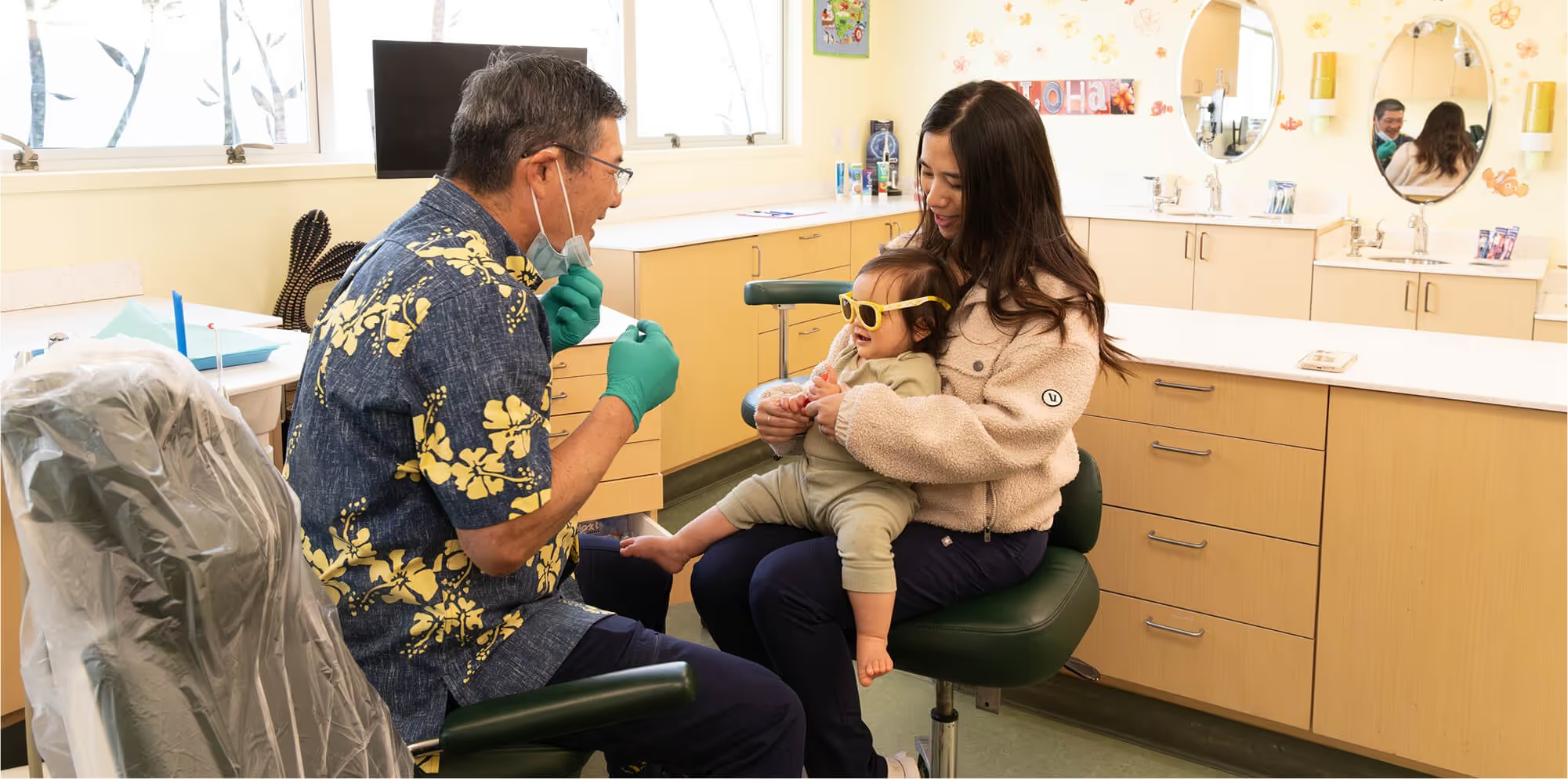
Some children need more from a dental visit than a smaller chair. They need a team that plans around how they experience the world: the sounds, the lights, the pace, the people. That is what special needs dentistry means at Aloha, and it has been part of our care for over 50 years.

Our board-certified pediatric dentists have special training and experience caring for children with special needs, including children with physical, behavioral, and developmental challenges. We plan each visit with you in advance, work at your child's pace, and offer sensory hours: appointments in a quieter office, with less stimulation and extra time, for children with autism, ADHD, or sensory sensitivities.
If you have been typing searches like "special needs dentist near me," "sensory friendly dentist," or "pediatric dentist autism" and finding offices that change nothing about the visit, this page is the specifics: what we cover, how a visit is structured, and what you can ask us to adjust.
Special needs dentistry is complete dental care, delivered differently. What changes is the planning, the pacing, and the room.
The care itself is the same care we give every child: exams and cleanings, fluoride and sealants, fillings and crowns, laser dentistry, and emergency care when something can't wait.
We care for children with autism, children with ADHD or sensory sensitivities, and children with physical, behavioral, and developmental challenges.
Children whose anxiety, or a hard visit somewhere else, has made the dentist feel impossible are welcome here. All three of our offices are wheelchair-accessible.
If your child is autistic, our guide to taking an autistic child to the dentist walks through how visits work here, step by step, including the checklist other parents helped us build.

Sensory hours are appointments set aside for children with autism, ADHD, or sensory sensitivities. During a sensory-hours visit, the office is quieter, there is less stimulation, and extra time is built in, so your child can settle in and nothing has to be rushed.
Sensory hours are available at all three of our offices, and they are arranged by phone rather than online booking. That is deliberate. The call is where the planning happens: you tell us what your child finds hard, what has helped before, and what a good visit would look like, and we shape the appointment around it before you arrive.
One of our parents, Carla, described it this way:
"My son is autistic and we have had a great experience at Aloha. They have "sensory hours" where they adjust the office to be less stimulating/quieter for kids and build in extra time for kids. I really appreciated that experience. I was so nervous about my son going to the dentist but he walked away very happy without any issues which was amazing."
For more on how these visits work and what you can request in advance, see our guide to sensory-friendly dental visits.
It starts before you walk in. When you call, tell us about your child: their diagnosis, what bothers them most, what helps them settle, and how they communicate. We prepare the team and the room around what you tell us.
A first visit can ask very little of your child. It can be a get-to-know-you visit: meet the team, look around the office, sit in the chair if they're willing, and leave while it is still going well. Dentists call this gradual path desensitization. Short, successful visits make real treatment possible later. Our first visits page explains how first appointments work for every child.
From there, visits grow at your child's pace:
Planning and pacing carry most children a long way. When they are not enough, there are other paths, and we will talk through each one with you honestly.
Nothing on this list happens without your consent. The goal is the least treatment that keeps your child's teeth healthy, in the way your child can manage.
Find answers to common questions parents have about special needs dentistry.
Sensory hours are available at every office, arranged by phone.
2640 Telegraph Ave, #101, Berkeley, CA 94704.
Call 510-848-6494 to ask about a sensory-hours visit at this office,
or see our South Berkeley location page.
906 Ensenada Ave, Berkeley, CA 94707.
Call 510-528-1546 to ask about a sensory-hours visit at this office,
or see our North Berkeley location page.
3 Altarinda Road, #210, Orinda, CA 94563.
Call 925-253-8190 to ask about a sensory-hours visit at this office,
or see our Orinda location page.
If you are not sure where to begin, begin there. Tell us about your child, ask us the hard questions, and we will plan a first step together, even if that first step is only a short visit to say hello.
New patients are welcome at all three of our offices:
We look forward to welcoming your family to our ʻohana.